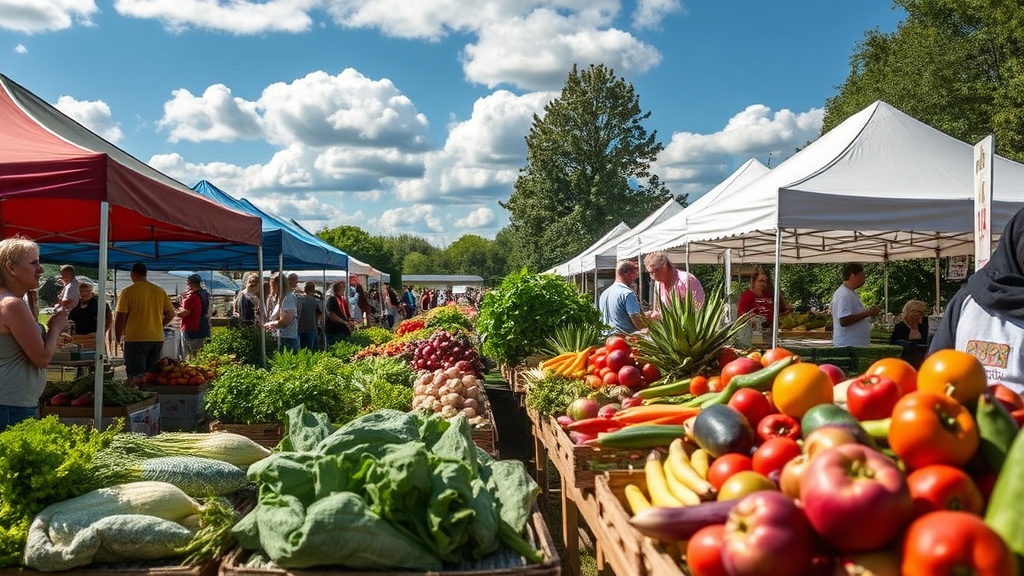
Your Ultimate Guide to Steinbach's Summer Farmers Market

This guide covers everything you need to know about Steinbach's summer farmers market—from what's in season and which vendors to visit, to parking tips and the best times to shop. Whether you're a longtime resident or new to the region, knowing how to make the most of the market means better meals, stronger community connections, and support for local Prairie growers who've been farming this land for generations.
What Can You Buy at Steinbach's Summer Farmers Market?
Fresh produce, locally raised meats, artisan baked goods, cut flowers, handmade crafts, and ready-to-eat meals fill the stalls from June through September. The Steinbach market operates at the Steinbach Arts Council grounds every Saturday morning, and vendors rotate based on seasonal availability.
Here's the thing—this isn't a curated boutique experience. You'll find tables stacked with imperfect carrots still clinging to soil, jars of pickled beets with handwritten labels, and bakers who'll remember your name by week three. The market reflects the agricultural reality of Manitoba's southeastern region: wheat, canola, and corn dominate the surrounding fields, but the market vendors specialize in the crops that don't scale to industrial agriculture.
Expect to see:
- Vegetables: Tomatoes (heirloom varieties from August), cucumbers, zucchini, beets, carrots, potatoes, onions, garlic, peppers, and leafy greens
- Fruits: Strawberries (June-July), raspberries, Saskatoon berries, rhubarb, and apples (late summer)
- Proteins: Grass-fed beef from Loewen Family Farms, free-range chicken, farm-fresh eggs, and freshwater fish
- Dairy: Raw milk cheeses, fresh curds, and European-style butter from Bothwell Cheese (sold through local distributors)
- Baked goods: Traditional Mennonite tweiback, farmer sausage buns, sourdough loaves, and butter tarts
- Prepared foods: Perogies, vereniki, farmer sausage, borscht, and pickled vegetables
The catch? Selection varies wildly by week. A hailstorm in June can wipe out a vendor's lettuce crop. An early frost in August might cut short the tomato season. Regular shoppers know to buy in quantity when something's abundant and preserve it—freezing, canning, or fermenting for winter months.
When Is the Best Time to Visit the Steinbach Farmers Market?
Arrive between 8:00 and 9:00 AM for first pick of produce, or come after 10:30 AM for discounted prices and smaller crowds. The market officially runs from 8:00 AM to 12:00 PM every Saturday, rain or shine, from the first weekend in June through the last Saturday of September.
Early birds get the best selection. Strawberries disappear by 9:30. The limited supply of grass-fed ribeye steaks from Pineview Farms? Usually gone before 10:00. If you're hunting something specific—say, garlic scapes or the first corn of the season—set an alarm.
That said, there's a case for sleeping in. Vendors don't want to pack unsold inventory back to the farm. By 11:00 AM, you'll hear calls of "two for one" on zucchini or "half-price on day-old bread." The atmosphere shifts from competitive to relaxed. Conversations lengthen. You might learn how Edna Wiebe makes her dill pickles or get a recipe for rhubarb custard pie from the woman selling stalks three tables down.
| Time | Best For | What to Expect |
|---|---|---|
| 8:00–9:00 AM | Peak selection, reserved orders | Busy, competitive, full parking lot |
| 9:00–10:30 AM | Balanced experience | Good selection, manageable crowds |
| 10:30–12:00 PM | Deals, casual browsing | Limited selection, friendly vendors, discounts |
Weather matters more than you'd think. Steinbach sits on the edge of the Canadian Prairies—storms roll in fast. A grey morning forecast keeps casual shoppers home, meaning shorter lines and more available parking even at peak hours. Worth noting: most vendors accept cash only, though an increasing number now take e-transfer or have Square terminals.
Where Exactly Is the Steinbach Farmers Market Located?
The market sets up at 304 Second Street, on the grounds of the Steinbach Arts Council—directly across from the Jake Epp Library and two blocks south of Main Street. The location puts you within walking distance of downtown Steinbach's restaurants and shops, making it easy to combine market shopping with other errands.
Parking spreads across three areas: the gravel lot adjacent to the Arts Council building (about 40 spots), street parking along Second Street, and overflow parking at the library lot on Elmdale Street. That sounds adequate. It isn't—at least not at 8:15 on a sunny Saturday in July.
Smart shoppers park on the side streets (Hespeler or Brandt) and walk three blocks. You'll save twenty minutes of circling. Bring reusable bags with sturdy handles—the walk back to your car with twenty pounds of root vegetables gets uncomfortable fast with flimsy plastic.
The market layout follows a loose grid. Produce vendors cluster near the entrance (best sunlight for displaying greens). Meat and dairy sellers occupy the central section, refrigerated coolers humming quietly. Prepared food stalls—hot coffee, breakfast sandwiches, fresh donuts—line the eastern edge. Craft vendors fill the remaining spaces: handmade soaps, knitted dishcloths, beeswax candles, and the occasional antique tool restoration display.
Which Steinbach Farmers Market Vendors Should You Know?
Certain vendors have built loyal followings over years—sometimes decades—of Saturday mornings. These aren't faceless suppliers. They're families with deep roots in the Hanover Municipality, farming methods passed down through generations, and products you won't find at the Steinbach Sobeys or Superstore.
Loewen Family Farms (stalls 12-14) raises grass-fed beef and pastured pork on 240 acres northeast of town. Their farmer sausage—smoked over hardwood, seasoned with black pepper and mustard seed—sells out weekly. The ground beef, packaged in one-pound frozen blocks, makes excellent burgers. Ask about their bulk pricing on quarter or half animals if you have freezer space.
Penner Produce (stalls 3-5) specializes in tomatoes. From mid-July through September, you'll find Cherokee Purples, Brandywines, San Marzanos, and dozens of cherry varieties. Owner David Penner cross-pollinates his own varieties and saves seeds—gardeners can buy starter plants in spring. His slicers taste like tomatoes should: acidic, sweet, with that faint metallic zing of vine-ripened fruit.
Rose's Bakeshop (stall 22) operates out of a certified home kitchen in Grunthal. The tweiback—sweet Mennonite buns twisted into figure-eights—arrive warm at 8:00 AM. The cinnamon rolls use local butter and real cream cheese frosting. Rose also takes special orders: wedding cookies, birthday cakes, platters of fruit platz.
Blatz Apiaries (stall 18) keeps hives across southeastern Manitoba. Their wildflower honey varies by season—light and floral in early summer, darker and more complex come fall. They sell liquid honey, creamed honey, and honeycomb. The propolis tinctures and beeswax candles make practical gifts.
Klassen Fishery (stall 9) drives up from the Whiteshell every Saturday with fresh-caught pickerel, walleye, and northern pike. The fish gets cleaned and filleted on-site while you wait. Smoked goldeye—a Manitoba delicacy—comes vacuum-sealed and ready for your charcuterie board.
How Do You Prepare and Store Market Produce?
Proper storage extends the life of fresh market produce by days or weeks—critical when you're buying in quantity during peak season. Prairie-grown vegetables often last longer than supermarket equivalents because they haven't spent a week in refrigerated transport.
Tomatoes: Never refrigerate. Keep stem-side down on your counter, out of direct sunlight. Use within 3–5 days for slicing tomatoes, 1–2 weeks for paste varieties. If you bought too many, slow-roast them with olive oil and garlic, then freeze in jars.
Root vegetables (carrots, beets, turnips): Remove the greens immediately—they draw moisture from the root. Store roots in the crisper drawer in perforated plastic bags. Unwashed carrots last 3–4 weeks; washed ones half that time. Here's the thing—those carrots with dirt still attached? They'll outlast the pre-washed "baby" carrots by weeks.
Leafy greens: Swish in cold water, spin dry, wrap in clean kitchen towels, then seal in plastic bags with most air pressed out. This method keeps lettuce crisp for 10 days. Kale and Swiss chard actually sweeten after a light frost—buy the late-season bunches for better flavor.
Garlic and onions: Cure them yourself if buying fresh (uncured) bulbs. Spread on a wire rack in a warm, dry, shaded spot for two weeks until papery skins form. Properly cured, they'll store through March in a cool basement.
Berries: Don't wash until ready to use. Spread on a baking sheet, freeze solid, then transfer to freezer bags. This prevents clumping. Frozen Saskatoon berries work beautifully in muffins and pancakes all winter.
Herbs: Treat soft herbs (basil, cilantro, parsley) like cut flowers—trim stems, place in water, cover loosely with plastic, refrigerate. Hardy herbs (rosemary, thyme, sage) dry easily hung upside down in paper bags.
What Makes Steinbach's Market Different?
The Mennonite heritage of the region shapes everything from the food available to the social atmosphere. This isn't a farmers market designed for Instagram aesthetics. You won't find artisanal toast bars or $8 avocado preparations. What you will find is a community gathering place where agricultural knowledge gets shared openly and where "local" means within 50 kilometers, not 500.
Conversations between strangers happen constantly. Someone asks how to prepare kohlrabi; three people offer recipes. A newcomer wonders if the eggs are really free-range; the vendor invites them to visit the farm (and means it). Elderly women debate the merits of different cucumber varieties for pickling with the intensity usually reserved for sports statistics.
The market also serves as an informal economic indicator for the region. When Loewen Family Farms raises beef prices, regulars know feed costs have climbed. When Penner Produce shows up with only half their usual table, drought conditions have hit. The direct connection between grower and eater means information flows both ways—farmers learn what customers want, and shoppers understand the real costs and challenges of Prairie agriculture.
Worth noting: the market operates with minimal official oversight. There's no entrance fee, no membership requirements for vendors beyond basic food safety compliance, and no corporate sponsorship banners. This keeps it accessible and authentically local—though it also means quality varies. Ask questions. Sample when offered. Build relationships with vendors whose standards match your own.
By September's end, the market shifts. Vendors start taking pre-orders for Thanksgiving turkeys. Squash and pumpkins replace tender greens. The last Saturdays feel like a reunion before hibernation—everyone knows it'll be eight months before the tables go up again. Stock your freezer. Learn to can. Write down the phone numbers of vendors who sell bulk. Winter's long on the Prairies, but the summer market makes it survivable.